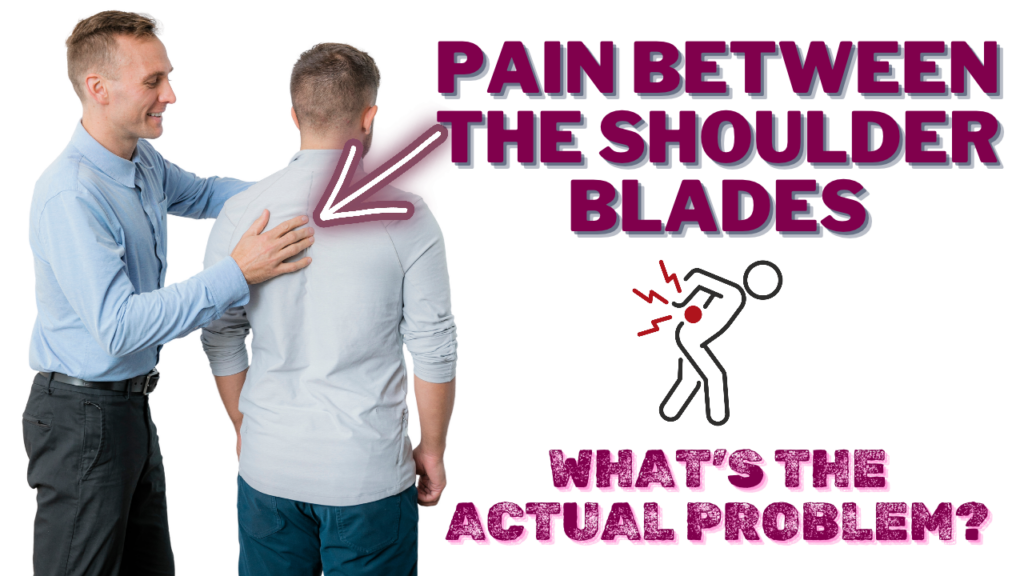
Why Does My Upper Back Hurt Between My Shoulder Blades?
Pain under or pain between the shoulder blades is a common complaint, particularly among people who spend long hours at a desk, drive frequently, or participate in activities such as cycling. If you want to know what is causing that pain between your shoulder blades and what to do about it, read on!
It can feel like a dull ache, a persistent knot, burning discomfort, or even a sharp pain with certain movements.
Most people assume the problem is muscular. They stretch, use a massage ball, or book a massage, only to find that the discomfort returns.
But what if the muscles aren’t the original source of the problem?
At Toronto Corrective Chiropractic, we frequently assess patients with persistent upper back discomfort where several different structures may be contributing to their symptoms. We have a few videos on rib-joint issues with hundreds of thousands of views so we are often sought out for these conditions!
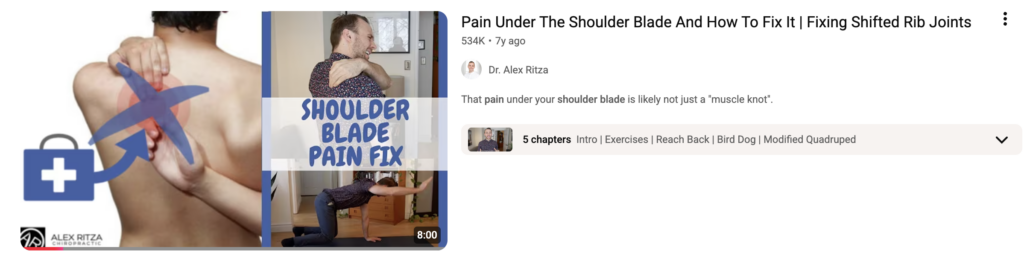
1. The Thoracic Spine May Be Contributing To Pain Between The Shoulder Blades
Your thoracic spine consists of 12 vertebrae connecting your neck and lower back and can be a frequent contributor/cause of pain between the shjoulder blades.
This region plays an important role in trunk movement and provides attachment points for your ribs.
Sometimes, pain between the shoulder blades is associated with sensitivity or movement-related dysfunction involving the thoracic spine.

You may notice discomfort when rotating your torso, extending your back, or remaining in certain positions for extended periods.
Although restricted movement can be a relevant clinical finding, not everyone with upper back pain has a mobility restriction.
The Cat-Cow is a great exercise to address dysfunction in the thoracic spine. If this is uneffected after a couple of weeks of daily care you should definetly seek professional care!
2. Your Rib Joints Can Cause Pain Near the Shoulder Blades
Each rib connects to the thoracic spine through joints called the costovertebral and costotransverse joints.
These structures can contribute to localized discomfort near the spine and shoulder blades.
Some patients experience sharp discomfort with trunk rotation, deep breathing, or certain movements.
However, pain with breathing is not specific to a rib-joint problem. New, severe, or unexplained symptoms require appropriate medical assessment to exclude other causes.
3. Your Neck May Be Referring Pain Into Your Upper Back Or Causing Pain Between the Shoulder Blades
This is one of the more interesting possibilities for pain between the shoulder blades
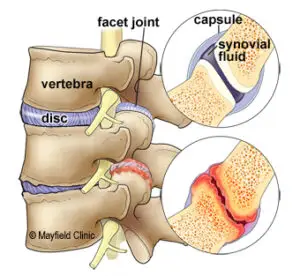
Not all pain felt between the shoulder blades originates in the thoracic spine.
Certain cervical spine conditions can produce referred pain into the shoulder blade or interscapular region.
In some cases, people experience significant shoulder blade discomfort with relatively little neck pain.
When symptoms are accompanied by arm pain, tingling, numbness, or weakness, cervical nerve involvement becomes an important consideration.
This is why a comprehensive assessment may include the cervical spine even when the primary complaint is between the shoulder blades.
4. Muscular Tension May Be Part of the Picture Of Pain Between The Shoulder Blades
The rhomboids, trapezius, and other muscles around the shoulder blades can certainly become painful.
But feeling a tight or tender muscle doesn’t automatically tell us why the symptoms developed.
Muscle pain may occur with repetitive loading, unfamiliar exercise, sustained positions, or other musculoskeletal problems.
Stretching or massage may temporarily improve comfort, but recurring symptoms deserve a broader assessment.
Is Poor Posture Causing Your Upper Back Pain?
Not necessarily.
There is no single ideal posture that prevents upper back pain.
However, spending extended periods in one position may aggravate symptoms in people who are already sensitive to sustained loading.
Rather than forcing yourself to sit perfectly upright all day, consider regularly changing positions and maintaining a variety of comfortable movements.
What Can You Do About Pain Between Your Shoulder Blades?
Three practical strategies may help:
1. Change positions regularly. Break up long periods of sitting or desk work with short movement breaks.
2. Maintain comfortable movement. Gentle thoracic rotation, walking, and appropriately selected strengthening exercises may help maintain function.
3. Investigate persistent symptoms. If the pain keeps returning, an assessment can help identify whether the neck, thoracic spine, rib joints, or surrounding muscles are contributing.
When Should You Seek Medical Attention?
Seek urgent medical attention for sudden or severe upper back pain accompanied by chest discomfort, shortness of breath, fainting, or other concerning systemic symptoms.
Progressive neurological weakness, significant trauma, fever, or unexplained persistent pain also warrant prompt assessment.
Treating the Core Problem, Not Just the Collateral Damage
At Toronto Corrective Chiropractic, we take a comprehensive approach to recurring musculoskeletal complaints.
Depending on the findings, treatment may involve chiropractic care, electroacupuncture, exercise rehabilitation, education, and changes to daily activities.
Our goal isn’t simply to make a painful muscle feel better temporarily.
It’s to understand what may be contributing to the discomfort and help you achieve more lasting improvement.
Experiencing persistent pain between your shoulder blades?
Toronto Corrective Chiropractic is located near Yonge & Bloor in downtown Toronto.
Visit https://torontocorrectivechiropractic.com/ to learn more or arrange an assessment.
Frequently Asked Questions
Why do I have a constant knot between my shoulder blades?
A persistent knot-like sensation may reflect local muscular discomfort or pain associated with other structures, including the cervical or thoracic spine. An examination can help identify relevant contributing factors.
Can neck problems cause pain between the shoulder blades?
Yes. Certain cervical spine conditions can refer pain into the shoulder blade region, sometimes without prominent neck pain.
Can rib joints cause upper back pain?
Rib joints can contribute to pain around the thoracic spine, particularly with certain trunk or breathing movements. However, other causes must be considered when symptoms are unexplained.
Can chiropractic care help upper back pain?
Some patients with musculoskeletal upper back pain may benefit from manual therapy combined with exercise and education. Appropriate treatment depends on the underlying clinical findings.